

Specialist Disability Accommodation Explained: What It Is, Who Qualifies, and How to Access It in Perth
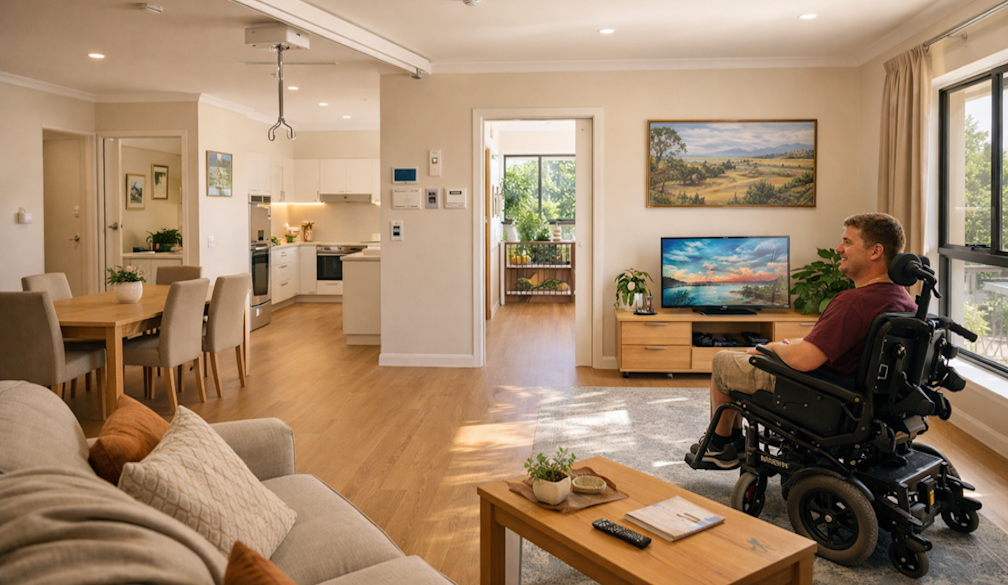
For many Australians living with significant disability, the question of where to live — and how to live there safely and comfortably — is one of the most important and most complex they will ever face. Standard housing simply isn't designed for people with extreme functional impairment. Doorways are too narrow, bathrooms can't accommodate hoists, environmental controls are inaccessible, and the absence of nearby overnight support makes independent living feel impossibly risky.
This is exactly the gap that specialist disability accommodation was created to fill. Since its introduction under the NDIS, SDA has opened the door to purpose-built, specialist-designed housing for participants whose needs cannot reasonably be met in standard accommodation — housing that is genuinely engineered around the person living in it, not retrofitted as an afterthought.
Yet despite being one of the most significant — and most misunderstood — funding streams in the NDIS, SDA remains inaccessible to many eligible participants simply because they don't know it exists, don't understand how to access it, or haven't received the right advice during their NDIS planning process. This guide aims to change that. If you or a family member might be eligible for SDA, what follows could be one of the most important things you read.
What Is Specialist Disability Accommodation?
Specialist Disability Accommodation is a specific category of NDIS funding that pays for the physical housing itself — the building — rather than the support services delivered within it. It is intended for NDIS participants with extreme functional impairment or very high support needs, for whom purpose-built or significantly modified housing is necessary to live safely and with an appropriate level of independence.
It's important to understand this distinction clearly: SDA funding covers the bricks and mortar. The support services a participant receives within their SDA home — personal care, overnight support, community access — are funded separately, typically through Supported Independent Living (SIL) or other support budgets within the participant's NDIS plan. SDA and SIL work together, but they are distinct funding streams with different eligibility criteria and different approval processes.
SDA providers are organisations or individuals who build, own, or manage SDA-enrolled dwellings and receive SDA payments from the NDIS on behalf of eligible participants. Participants choose their SDA dwelling and provider — they are not assigned housing — and their SDA funding follows them to the dwelling they select.
The Four SDA Design Categories
Not all SDA properties are the same. The NDIS has established four design categories, each designed to meet different levels of functional need. Understanding these categories is essential for participants and families trying to identify what type of SDA a participant might need — and what to look for when evaluating properties.
Improved Liveability
Improved Liveability SDA is designed for participants with sensory, intellectual, or cognitive disability. These properties incorporate features that improve physical access and liveability — wider doorways, better lighting, reduced trip hazards, and layouts that support orientation and navigation — without necessarily requiring the full physical accessibility features of higher-category designs.
Improved Liveability is the most commonly available SDA category and is suitable for participants whose primary barriers to standard housing relate to cognitive or sensory impairment rather than significant physical disability.
Fully Accessible
Fully Accessible SDA is designed for participants with significant physical disability who use a wheelchair or have significant mobility impairment. These properties provide full step-free access throughout, wider doorways and corridors, roll-under bench tops and accessible kitchen and bathroom design, and other features that enable a participant with physical disability to move around their home and use its facilities as independently as possible.
Fully Accessible properties go significantly further than standard accessible housing design — they are built to enable genuine independence for people with serious physical impairment, not simply to meet minimum access standards.
High Physical Support
High Physical Support SDA is the most intensive physical design category and is intended for participants with the highest levels of physical impairment — those who require ceiling hoists, powered doors, and smart home automation to manage their environment. These properties include structural provisions for ceiling hoist systems throughout the home, backup power for life-critical equipment, and integration with assistive technology that allows participants to control their environment through alternative access methods.
High Physical Support SDA is purpose-engineered housing at its most specialised. For participants with conditions such as high-level spinal cord injury, motor neurone disease, or severe cerebral palsy, this category of SDA can be the difference between genuine home living and institutional care.
Robust
Robust SDA is designed for participants whose disability is associated with very high support needs and behaviours of concern that create risks to the property or to other people. These properties are built with reinforced materials, reduced ligature points, and designs that minimise environmental triggers and maximise safety — for the participant and for those supporting them.
Robust SDA plays a critical role in supporting participants with complex psychosocial or behavioural needs to live in the community rather than in institutional or forensic settings. The design of these properties reflects a careful balance between safety and homeliness — they are not meant to feel like facilities, but like homes that happen to be built for resilience.
Who Is Eligible for SDA Funding?
SDA eligibility is one of the most frequently misunderstood aspects of the funding stream. It is not available to all NDIS participants — approximately six per cent of NDIS participants are eligible — and meeting the eligibility criteria requires specific evidence and a deliberate approach to the NDIS planning process.
To be eligible for SDA funding, a participant must meet all of the following criteria:
- They must be an NDIS participant — SDA is only available through the NDIS
- They must have extreme functional impairment or very high support needs as a result of their disability
- Their housing needs cannot be reasonably met in standard, unmodified housing
- SDA is likely to deliver significant improvement in their outcomes and reduce the need for other supports over time
The NDIS uses a specific assessment framework to determine SDA eligibility, and the decision is made during the NDIS planning process. Eligibility is not automatically granted — it requires a strong, evidence-based case that clearly demonstrates the participant's functional impairment, their housing needs, and the expected outcomes of SDA funding.
The Role of Evidence in SDA Eligibility
The quality and comprehensiveness of the evidence provided to the NDIS is the single biggest determinant of SDA eligibility decisions. Participants who are rejected for SDA — or who receive a lower SDA design category than their needs require — have frequently been let down by insufficient or poorly presented evidence, not by their actual level of need.
The key evidence documents in an SDA eligibility case typically include:
- An Occupational Therapist (OT) housing assessment — this is the cornerstone document and must be comprehensive, specific about functional limitations, and clearly linked to housing requirements
- Medical and specialist reports documenting the nature and severity of the participant's disability and its functional impact
- A Functional Capacity Evaluation where relevant
- Evidence of current housing situation and why it is inappropriate or unsustainable
- Documentation of any previous housing arrangements and why they have not met the participant's needs
Working with an experienced Occupational Therapist and Support Coordinator who have specific expertise in SDA eligibility cases is strongly recommended. Generic assessments that don't speak directly to the NDIS SDA eligibility criteria — no matter how detailed they are clinically — frequently fail to achieve SDA approval.
Understanding the SDA Market in Perth
The supply of SDA dwellings in Perth, as in most Australian cities, has grown significantly since the NDIS SDA framework was introduced — but demand continues to exceed supply in many categories, particularly High Physical Support and Robust.
Perth's SDA market has some specific characteristics that families should understand. The metropolitan area is large and geographically spread, which means the location of available SDA properties varies considerably across the city. Some areas have relatively strong SDA supply; others have very limited options. For participants with strong ties to a particular community or family network, finding SDA in the right location can require significant patience and advocacy.
The mix of SDA property types in Perth also varies. While individual apartments and small group homes represent the majority of SDA supply, there is growing availability of innovative housing models — including co-located designs where participants live in individual self-contained dwellings with shared communal spaces — that offer greater privacy and autonomy than traditional shared accommodation models.
For families exploring SDA housing options in Perth, connecting with a Support Coordinator who has strong knowledge of the local SDA market is one of the most practical steps you can take. The SDA landscape changes as new developments are completed and enrolled, and a well-connected Support Coordinator will know what is available — or coming available — in areas that suit the participant's needs and preferences.
The SDA Application Process: A Step-by-Step Overview
Navigating the SDA application process can feel daunting, but understanding the key steps makes it significantly more manageable.
Step 1: Confirm NDIS Participation and Plan Status
SDA funding must be included in the participant's NDIS plan. If the participant is not yet an NDIS participant, the first step is completing the NDIS access process. If they are already a participant but SDA is not included in their current plan, a plan review will be required to have SDA considered.
Step 2: Gather Comprehensive Evidence
Commission the key evidence documents — particularly the OT housing assessment — from professionals with specific experience in SDA eligibility cases. Allow adequate time for this process; a thorough OT housing assessment can take several weeks to complete, and rushing it risks producing a document that doesn't adequately support the eligibility case.
Step 3: Work with Your Support Coordinator
A Support Coordinator with SDA experience will help you compile and present the evidence effectively, prepare for the NDIS planning meeting, and advocate for the participant's SDA needs during the planning process. Their knowledge of how the NDIS assesses SDA eligibility — and what the common pitfalls are — is genuinely valuable.
Step 4: NDIS Planning Meeting
The planning meeting is where SDA eligibility is formally considered. Come prepared with all evidence documents, a clear articulation of why the participant's current housing is inappropriate, and a well-developed case for why SDA — and specifically which design category — is needed. If possible, have your Support Coordinator present or available by phone during the meeting.
Step 5: Review the Decision and Appeal if Necessary
If SDA is approved, the plan will specify the SDA design category and the funding amount. Review this carefully — if the approved category doesn't reflect the participant's actual needs, an internal review or AAT appeal may be warranted. If SDA is not approved, don't accept the decision without understanding the reasons and considering whether additional evidence or a formal review could change the outcome. Many successful SDA approvals come on review, not on the initial decision.
Step 6: Find and Select an SDA Dwelling
Once SDA funding is in the plan, the process of finding and selecting a suitable dwelling begins. Participants have the right to choose their SDA home — they should visit properties, meet the support providers operating within them, and make a genuinely informed choice. Don't rush this process. The right home, with the right support, in the right location, is worth waiting for.
What Life in SDA Actually Looks Like
For families who haven't experienced SDA housing firsthand, it can be difficult to visualise what life in a specialist disability accommodation setting actually involves. The picture is more varied — and in good examples, far more positive — than many people expect.
Quality SDA is not institutional. It doesn't look or feel like a facility. A well-designed SDA apartment or home is genuinely homely — personalised, private, and comfortable. Participants decorate their spaces, have their own furniture, set their own routines, and live with a genuine sense of ownership over their home environment.
The support within an SDA home — funded through SIL or other budgets — is delivered by support workers who come to the participant's home, not the other way around. In well-run SDA arrangements, participants build genuine relationships with their support workers over time, developing trust and familiarity that makes the support both more effective and more enjoyable to receive.
Community connection is a priority in quality SDA arrangements. Participants are supported to engage with their neighbourhood, maintain friendships and family relationships, pursue interests and activities, and be part of the community around them — not isolated within the walls of their housing.
Final Thoughts: Advocating for What You're Entitled To
Specialist Disability Accommodation represents one of the most significant investments the NDIS makes in the lives of participants with extreme functional impairment. For those who need it, it is not a luxury — it is the foundation on which everything else becomes possible.
The path to securing specialist disability accommodation in Perth requires persistence, good evidence, and the right support around you. Families who approach the process with clear information, experienced allied health and coordination support, and a willingness to advocate strongly for what their loved one is genuinely entitled to consistently achieve better outcomes than those who accept the first answer they're given.
If you believe you or a family member may be eligible for SDA — or if you've been knocked back previously and aren't sure whether to pursue it further — the most important thing you can do is seek advice from professionals who know this space deeply. The right housing changes everything. It's worth fighting for.

 Hashtag.net.au


