

How Smart Site Managers Source Wholesale Medical Supplies to Keep Their Teams Safe and Compliant
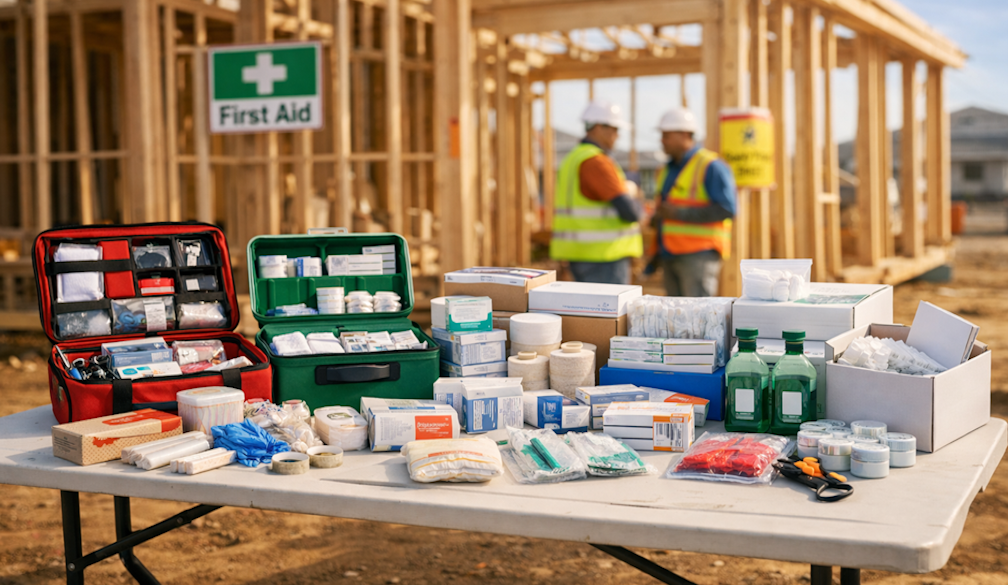
If you're running a construction site, a civil project, or a trade-based operation anywhere in Australia, first aid preparedness probably sits somewhere near the bottom of your planning checklist — right up until the moment something goes wrong. A laceration from a grinder, a crush injury, a worker going into shock after a serious fall — these aren't hypotheticals. They happen on Australian worksites every single week. And when they do, what you have on hand, and whether it actually meets the situation, makes all the difference.
For site managers and trade business owners overseeing multiple workers, vehicles, or locations, purchasing first aid supplies one box at a time from a hardware store simply doesn't cut it. That's why sourcing wholesale medical supplies from a specialist supplier has become standard practice for operations that take safety seriously — and for those that need to stay on the right side of Australian WHS legislation.
The Real Cost of Being Underprepared on Site
Let's be direct about what's at stake. Safe Work Australia data consistently shows that the construction and trade sectors account for some of the highest rates of serious workplace injuries in the country. Falls from height, lacerations, crush injuries, eye injuries, and heat-related illness are the most common presentations — and each one demands a specific, immediate response.
An underprepared first aid kit — or worse, no kit at all — doesn't just put the injured worker at greater risk. It exposes the business to significant legal liability. Under the model Work Health and Safety (WHS) Act adopted across most Australian states and territories, employers are required to provide first aid equipment that is appropriate for the hazards present in the workplace, and to ensure that equipment is accessible and properly maintained.
Non-compliance can result in improvement notices, fines, and in serious cases, prosecution. But beyond the legal exposure, there's a human cost that no site manager wants to carry. Having the right supplies available — and in sufficient quantity — is both a legal obligation and a basic duty to the people who show up to work for you every day.
Why Wholesale Makes Sense for Trade and Construction Operations
For businesses managing more than a handful of workers, buying first aid supplies at retail prices is an unnecessary expense. Wholesale purchasing through a reputable medical supply specialist offers several practical advantages that directly benefit site managers and business owners:
Cost Efficiency at Scale
The unit cost of medical supplies drops significantly when purchased in bulk. Consumables like gloves, dressings, bandages, eye wash solutions, and wound closures are used and replaced regularly on active worksites — and buying them at retail markup every time they run low adds up quickly. Wholesale supply agreements or bulk orders allow businesses to lock in better pricing and maintain adequate stock without the ongoing cost hit.
Consistent Supply Across Multiple Sites
For companies running several projects simultaneously — which is the norm for most mid-to-large trade and construction businesses — maintaining consistent first aid supply standards across all sites is both a safety and compliance requirement. Sourcing from a single wholesale medical supplier makes it straightforward to standardise kit contents, ensure uniform compliance, and manage restocking centrally rather than site by site.
Access to Industry-Appropriate Products
General retail first aid supplies are designed for the average consumer. Worksites need products that are rated for the specific hazards present in construction and trade environments. A specialist wholesale medical supplier stocks products that meet the requirements of Australian Standards and WHS regulations — including heavy-duty wound management supplies, burn dressings, eye irrigation stations, and emergency oxygen equipment that you simply won't find at the local chemist.
Streamlined Procurement and Record-Keeping
Purchasing from a dedicated wholesale medical supplier simplifies procurement. Rather than piecing together supplies from multiple sources, site managers can consolidate orders, maintain clear purchasing records, and demonstrate due diligence in first aid compliance — which matters considerably if a workplace incident ever leads to a WHS investigation.
What Should a Worksite First Aid Kit Actually Contain?
Australian WHS regulations specify minimum first aid kit requirements, but the right kit for your site depends on the nature of the work, the number of workers, and the proximity to emergency medical services. Here's what should be non-negotiable for most trade and construction environments:
- Sterile wound dressings and non-adherent pads in a range of sizes
- Conforming and crepe bandages (multiple sizes)
- Triangular bandages for splinting and slings
- Disposable nitrile gloves — multiple pairs per kit
- Wound closure strips and adhesive dressings
- Eye wash solution and single-use eye baths
- Burns dressings and hydrogel — essential for any site with welding, grinding, or cutting operations
- CPR face shield or pocket mask
- Instant cold packs
- Scissors and tweezers
- Emergency thermal blanket
- First aid reference guide
For higher-risk sites — particularly those with significant fall hazards, remote locations, or operations involving heavy machinery — the requirements go further. This is where having access to a proper trauma first aid kit becomes critical.
Trauma Kits: When Standard First Aid Isn't Enough
Standard first aid kits are designed to manage minor injuries and stabilise patients while awaiting emergency services. But on a construction site where a worker has suffered a serious laceration, a penetrating injury, or significant blood loss, a standard kit may not have what's needed to manage the situation effectively in the critical minutes before an ambulance arrives.
Trauma kits are specifically designed for high-acuity injury management. They typically include haemostatic dressings for controlling severe bleeding, wound packing gauze, tourniquets, chest seals for penetrating chest injuries, and advanced airway management tools. For any worksite where the risk of serious traumatic injury is elevated — and in construction and civil works, that means most sites — having a dedicated trauma kit on hand isn't excessive. It's responsible.
The shift in Australian workplace safety culture over recent years has seen more site managers proactively adopting trauma-capable first aid provisions, particularly following increased awareness around haemorrhage control and the "Stop the Bleed" framework that has gained traction in both civilian and professional emergency response contexts.
Compliance-Ready Kits: Taking the Guesswork Out of WHS Obligations
One of the most practical advantages of sourcing from a specialist medical supply company is access to kits that have been specifically configured to meet Australian compliance requirements. Rather than trying to piece together a compliant kit from scratch — which requires a detailed understanding of Safe Work Australia guidelines, state-specific variations, and Australian Standards — site managers can select pre-configured kits that are already built to meet the relevant requirements.
For trade businesses and construction companies, purpose-built workplace first aid kits that meet Australian compliance standards remove the ambiguity from kit selection. They're configured to the specifications required under Australian WHS legislation, clearly labelled, and typically include a contents checklist that simplifies regular auditing and restocking.
This matters not just for day-to-day operations, but for tendering and contract work. Many principal contractors and government project clients now require demonstrated WHS compliance — including first aid preparedness — as part of the prequalification and site induction process. Having clearly compliant, properly documented first aid provisions is a competitive advantage as well as a legal necessity.
How Many Kits Do You Actually Need?
This is a question site managers often underestimate. Safe Work Australia's guidance specifies that the number of first aid kits should reflect the number of workers, the layout of the site, and the distance between work areas. A general rule of thumb for construction environments:
- 1–10 workers at a low-risk site: minimum one small kit
- 11–25 workers at a moderate-risk site: minimum one medium kit
- 26–50 workers at a high-risk site: minimum one large kit, ideally with additional smaller satellite kits positioned throughout the site
- Worksites spanning large areas or multiple levels: additional kits positioned to ensure no worker is more than a few minutes' travel from a kit
For mobile operations — tradespeople working across multiple residential or commercial sites in a day — each vehicle should carry its own kit. It's also worth factoring in a dedicated kit for site offices and amenities areas, separate from the kits positioned at the active work face.
Building a First Aid Maintenance Routine Into Site Operations
Sourcing the right supplies is only half the equation. Maintenance is where many businesses fall short. A first aid kit that's been depleted and not restocked, or that contains expired consumables, offers false assurance and potential liability. Build these practices into your standard site operations:
- Assign a named First Aid Officer at each site who is responsible for kit checks — weekly on active sites, monthly for lower-activity environments
- Log every item used from the kit and trigger restocking immediately, not at the next scheduled order
- Conduct a full kit audit at the start of every new project and at the commencement of each calendar year
- Check expiry dates on sterile items, wound dressings, and eye wash solutions — these have a finite shelf life
- After any significant incident, review and restock before work resumes
- Keep purchasing records as part of your WHS documentation — they demonstrate due diligence
Training: The Essential Complement to Good Equipment
Even the most comprehensively stocked first aid kit is only useful in the hands of someone who knows how to use it. First aid training for site workers and supervisors is a WHS requirement — and the investment pays off well beyond regulatory compliance.
At minimum, sites should ensure:
- At least one person per site holds a current HLTAID011 (Provide First Aid) certification at all times during working hours
- Supervisors and site managers hold current certifications and understand their obligations during a first aid emergency
- For high-risk sites, consider HLTAID014 (Provide Advanced First Aid) for nominated first aiders
- CPR certification is refreshed annually as recommended by Australian Resuscitation Council guidelines
Pairing quality wholesale medical supplies with properly trained personnel creates a genuine safety culture — one that workers notice and that reduces the likelihood of minor incidents escalating into serious ones.
Choosing the Right Wholesale Medical Supplier
Not all medical supply companies are equal, and for businesses making purchasing decisions at scale, supplier selection matters. When evaluating wholesale medical supply options for your trade or construction operation, look for:
- Products that comply with relevant Australian Standards and WHS requirements
- Clear product descriptions that make it easy to verify kit contents against compliance requirements
- Reliable stock availability — running out mid-project is not acceptable
- Responsive customer service that understands the needs of trade and site-based businesses
- Transparent pricing and straightforward bulk ordering processes
- A product range that covers the full spectrum of worksite needs — from basic consumables through to trauma and emergency equipment
The Bottom Line
For Australian tradespeople and site managers, first aid preparedness is not optional. It's a legal obligation, a duty of care, and — for businesses that want to operate professionally and win competitive work — an operational standard that clients and principal contractors increasingly expect.
Sourcing quality wholesale medical supplies through a specialist supplier is the most practical and cost-effective way to meet that standard consistently, across every site and every team. Pair that with the right trauma provisions, properly configured compliance kits, and a disciplined maintenance routine, and you've built a first aid system that genuinely protects the people doing the work — which is, ultimately, what it's all for.

 Hashtag.net.au


