

From Jurassic Park to dreams of AI doom, pop culture shapes science more than we like to admit
- Written by Anna-Sophie Jürgens, Senior Lecturer in Science Communication at the Australian National Centre for the Public Awareness of Science, and Founder of Popsicule, ANU’s Science in Popular Culture and Entertainment Hub, Australian National University
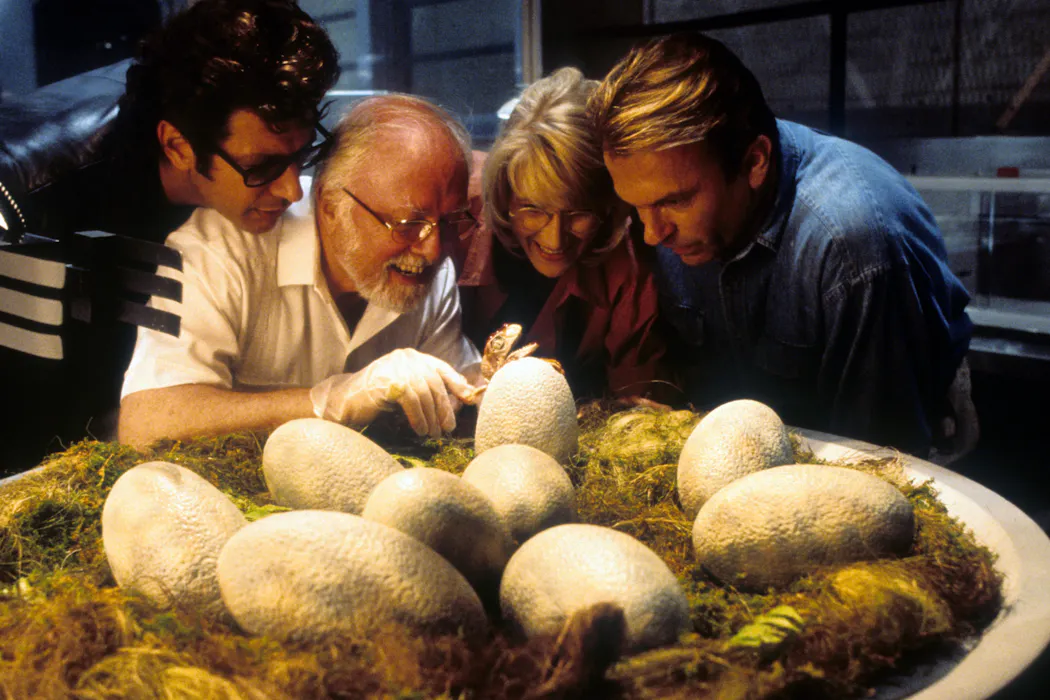
The relationship between science and pop culture often looks like a one-way street: scientific discoveries inspire films, television and novels, particularly in science fiction. But the relationship really goes both ways, and extends beyond sci-fi.
Increasingly, pop culture shapes how science is imagined, discussed, and in some cases how it is developed.
From Jurassic Park to The Last of Us and cutting-edge debates about the safety of artificial intelligence (AI), fictional narratives do more than entertain.
They shape the frameworks through which audiences – including scientists, policymakers and funders – make sense of complex scientific ideas and of science itself. In doing so, they influence what seems possible and plausible, as well as what we want and fear.
From Jurassic Park to reality
Your scientists were so preoccupied with whether they could, they didn’t stop to think if they should.
This famous line, delivered by fictional mathematician Ian Malcolm in Jurassic Park, has become a touchstone in debates about emerging technologies.
Take de-extinction. When biotechnology company Colossal Biosciences announced plans in 2021 to revive bygone species such as the woolly mammoth, the comparison was immediate: Jurassic Park. The film has become a cultural shorthand for the promises and pitfalls of bringing extinct species back to life.
Scientists and commentators alike invoke its famous ethical warning – that the question of whether we should do something is separate from whether we can. These references are not merely rhetorical. They shape how research is communicated, debated and understood.
By framing de-extinction through a familiar narrative, Jurassic Park has influenced public expectations, ethical anxieties and media discourse. We see projects described as “real-life Jurassic Park”, debates about whether such technologies should be pursued citing the film, and journalists using it as a shorthand when covering emerging biotechnologies.
Assimilating aliens and fungal zombies
The influence of science fiction can extend to scientific practice itself. Researchers named DNA elements which incorporate foreign genetic material “Borgs”, for example, after the assimilating aliens from Star Trek.
A similar dynamic can be seen in responses to HBO’s The Last of Us, which imagines a global pandemic caused by a parasitic fungus that transforms humans into zombie-like creatures. Following the show’s release, scientists reported renewed public interest in fungal pathogens.
Indeed, the “worst-case scenario” presented in the series prompted immunologists and mycologists to examine the biological plausibility of a fungal leap to humans.
While the temperature of the human body is inhospitable to most kinds of fungus, and we need not fear the aggressive biting depicted in fiction, experts warn that climate change and agricultural fungicide overuse are accelerating fungal adaptation to higher temperatures. This makes The Last of Us a sobering alarm for real-world problems.
In both cases, pop culture does not simply reflect scientific knowledge. It shapes how that knowledge is encountered, interpreted and imagined.
Killer superintelligence
One of the most compelling examples of this feedback loop today is AI. Popular culture has long been fascinated with intelligent machines, often imagining them as existential threats. We see this from deceptive superintelligences to human extinction, as portrayed in Ex Machina, The Matrix and The Terminator. These narratives have left a deep imprint on public consciousness.
Today, similar themes appear in real-world debates about AI safety. Prominent figures in AI debates, such as Nick Bostrom, Eliezer Yudkowsky and Geoffrey Hinton, have warned about the potential risks of advanced AI. The warnings include scenarios that echo earlier fictional imaginings.
While these arguments are grounded in technical and philosophical work, they resonate so widely in part because they align with familiar cultural narratives.
This does not mean concerns about AI are simply fictional. Rather, it shows how deeply intertwined scientific thinking and cultural imagination can be.
Understanding the feedback loop
Pop culture helps establish the language, metaphors, and expectations through which emerging technologies are understood. It shapes how scientific ideas, ideas about science, and images of scientists circulate beyond laboratories and institutions – and, in turn, how science is understood, valued and positioned in society.
At the same time, science continues to feed back into pop culture. Advances in genetics, epidemiology and AI provide new material for storytellers, shaping the kinds of futures that are imagined on screen. The result is a dynamic feedback loop: science inspires stories, and those stories in turn influence how science develops.
Despite this, the role of pop culture is rarely acknowledged in how we think about science policy and funding. Discussions tend to focus on infrastructure and technical capability, while overlooking the cultural forces that shape public imagination.
Yet these forces play a crucial role in determining which scientific futures feel worth pursuing. This matters because public perception influences everything from research funding to regulatory priorities.
If certain technologies are seen as exciting, frightening or inevitable, this affects how they are supported, scrutinised or resisted. Pop culture is one of the key arenas in which these perceptions are formed.
Authors: Anna-Sophie Jürgens, Senior Lecturer in Science Communication at the Australian National Centre for the Public Awareness of Science, and Founder of Popsicule, ANU’s Science in Popular Culture and Entertainment Hub, Australian National University

 Hashtag.net.au
