

4 pivotal elections around the world that will pose a test to democracy in 2026
- Written by Jean-Nicolas Bordeleau, Research Fellow, Jeff Bleich Centre for Democracy and Disruptive Technologies, Flinders University
Amid increasing polarisation, disinformation and economic anxieties, the health of representative democracies will be tested in elections across all continents in 2026.
There are four pivotal elections that will either reinforce democratic norms or risk further eroding confidence in free and fair processes.
1. US midterms: a referendum on Trump
Scheduled for November 3, the US midterm elections will see all 435 seats in the House of Representatives up for grabs, as well as a third of the 100 Senate seats.
Historically, the party controlling the White House tends to lose ground in the midterms. This makes the 2026 elections a high-stakes moment for President Donald Trump. Current polling indicates the Republicans could lose control of the House and see their Senate majority winnowed down to two or three seats.
Trump has taken advantage of a pliant Congress to pass his legislation (such as the “big, beautiful bill”), get his judicial appointments approved and escape the usual oversight of his executive branch.
So, if Trump loses one or both chambers, it will likely lead to legislative gridlock. And, if the first Trump administration serves as an example, a Democrat-controlled House could mean trouble for the president.
More crucially, the 2026 midterms will be a test of the US democratic spirit two years into Trump’s second term. With persistent concerns over electoral integrity and democratic backsliding, the midterms will determine whether the Democrats in Congress have the ability to finally hold Trump to account.
2. Brazil: a return to normalcy?
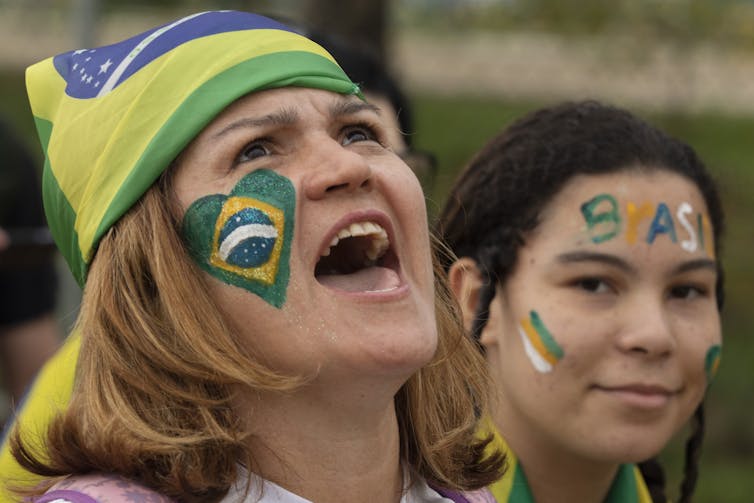
Brazilians will go to the polls on October 4 to elect a new president, the National Congress, and state governors and legislators. The 79-year-old incumbent president, Luis Inácio Lula da Silva, is seeking an unprecedented fourth term.
Lula has had a topsy-turvy political career thus far. In 2017, he was convicted of corruption and money laundering and began serving a 12-year sentence. This disqualified him from running in the 2018 general election.
Lula was freed in 2019 and his conviction was nullified two years later, paving the way for him to return to office in a narrow win over then-incumbent Jair Bolsonaro.
Lula’s third term in office started with a failed coup in early 2023 orchestrated by Bolsonaro and his allies. Bolsonaro has now been sentenced to 27 years in jail for his role in the attempted coup.
Meanwhile, Lula has had mixed reviews from voters, with recent polling showing just a third of Brazilians think he has done an excellent job and a third believe he’s been poor. The rest are in the middle.
With Jair Bolsonaro’s eldest son, Flavio, confirming his intention to run, the election will be a test of whether Bolsonarismo – Jair’s right-wing political movement – can survive under a new leader.
The election will also determine if Brazil can move beyond its recent history of polarisation and instability and safeguard its democracy.
3. Bangladesh: a major opportunity for Gen Z
Bangladesh’s February general election offers something the country has not seen in more than 15 years: a genuine opportunity for citizens – especially young people – to participate in a free, fair and competitive vote.
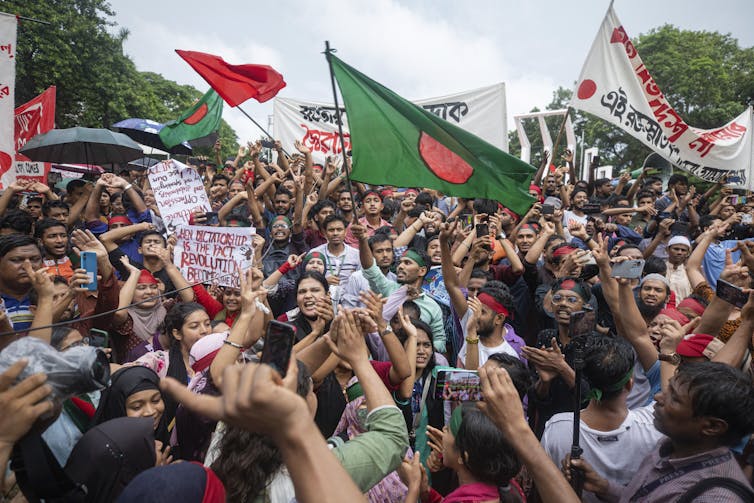
For the Gen Z activists who helped oust Prime Minister Sheikh Hasina’s autocratic government in 2024, this moment is consequential.
After the student uprising toppled Hasina, the power vacuum was filled with an interim government led by Nobel Peace Prizer winner Muhammad Yunus. It was tasked with repairing the institutions that had been hollowed out by one-party rule.
More than a year on, the administration has tried to restore the independence of the judiciary, election commission and media – essential foundations for any credible transition of power.
Youth leaders are now trying to use this momentum to enter the political system through their new National Citizens Party (NCP). However, they remain wary of reforms without firm legal guarantees.
Their emergence on the political scene signals a remarkable bottom-up transition in a country where nearly 40% of the population is under 18.
What happens in February will reverberate beyond Dhaka. A credible vote could anchor democratic norms and regional stability in South Asia. A compromised one risks squandering the youth-driven revival that made this election possible.
4. Quebec: renewed push for independence?
The Quebec general election, scheduled for October 5, presents a different kind of democratic challenge. This election will be rooted in identity and the ongoing question of national belonging within the Canadian federation.
This contest comes on the heels of the incumbent government’s controversial new laws mandating the use of the French language and expanding state secularism.
These issues will inevitably dominate the campaign and bring with it existential questions related to Quebec’s sovereignty.
The 2026 election is poised to be a battle for the hearts of Francophone voters, particularly between the governing centre-right Coalition Avenir Québec, the Liberal Party of Quebec and the resurgent Parti Québécois (PQ).

The PQ, which is currently leading in opinion polls, is openly committed to holding a third independence referendum.
While support for independence may not yet be at a majority level, a strong mandate for the PQ could reignite the sovereignty debate. This would bring significant constitutional tensions within Canada – and could very well shape the future of the country.
Authors: Jean-Nicolas Bordeleau, Research Fellow, Jeff Bleich Centre for Democracy and Disruptive Technologies, Flinders University


 Hashtag.net.au
